A couple of weeks ago, one of the most unique people in our industry passed away.
A quiet man of incredible volume, Om Malik was the person whose voice traveled only a few feet but always filled the room. He was the first national reporter to write about our little startup Newsvine in 2005, and for that I will always be indebted to him. Om and Rafat Ali were the two writers I could always count on to ask hard questions and keep founders honest when they tried to describe how they were improving the world. His article was hopeful and optimistic, yet balanced, which happens to describe his personality as well.
When I moved to San Francisco in 2012 to work at Twitter, I got to see Om more frequently. He always wanted to meet at Piccino. He said it was his favorite restaurant, but I imagine he had hundreds of others around the world he loved just as much for different reasons.
Om was a loving and well-loved man. Spend 10 minutes thumbing through every single photo in Christopher Michel’s Om The Great and you’ll feel it in your bones. How does a person so prolific in his field find this much time to experience the natural world, surrounded by hundreds of loving friends and even more exotic cameras?
It’s because he knew that the whole point of life is to experience it in whatever way gives you joy and purpose. That wasn’t spending every waking hour working on a startup, attending a tech conference, or promoting himself online. It was putting his best energy into his writing whenever inspiration struck, and then putting his best energy into travel, photography, generosity, and friends at all other times.
If there’s one thing you take from traveling through Om’s life via Chris’ gallery, it should be the importance of getting your priorities in order. Om often credits his heart attack at age 41 with giving him the clarity to re-prioritize his life. Sometimes, we need to experience a moment of mortality like this to remember our days of even drawing another breath — let alone surrounded by friends and nature — are finite. There is no reason that needs to be the case, however.
Any one of us can decide on any given morning we want to live a bit more like Om Malik. A bit more travel. A bit more smiling. A bit more actually connecting with friends instead of dozens of “we should hang out sometime” near-encounters.
If you’re in tech and you don’t have at least a little career anxiety right now, you are either overly confident or you aren’t paying attention. Engineers are jittery. PMs are jittery. Designers and Researchers are jittery. The simplest way to explain what’s happening is:
The assembly layer is going away.
The assembly layer has been around since the beginning of digital product development. For engineers, it includes things like writing a function that calls an API and stores the results in a database. For PMs, it includes culling through experimentation data and collecting significant results into a slide deck. For designers, it includes specifying a button hover state for the thousandth time. For researchers, it involves going through open-ended survey results line by line and tagging each result.
“White-collar assembly work” is the digital equivalent of all of the various trades that go into building a house. It is not the conception and planning of the house, but rather the drywall, flooring, electrical, and dozens more essential, skilled functions. This work is noble and important, but in the digital world, a lot of it is rapidly being eaten by AI.
The next question to ask yourself then is am I an assembler?
I would argue that at least in design, most of us are some percentage assembler. It could be 5%, it could be 100%, but it’s rarely zero. I run the largest design team at Microsoft AI, and even I spend some of my time nudging things around in Figma, trying to make decks look sharp, and performing some truly lizard-brain level data entry.
Orchestral Manoeuvres in the Dark
In order to prepare for a world where the nature of the work is changing so dramatically, Microsoft and many other companies are moving towards more of an Individual Contributor empowered environment. Some people assume this means all managers are going away. This is not the case. What it actually means is:
A true dual-track career path. Tech companies have been saying managers and ICs are rewarded evenly for 15 years now, but it’s often not the case in practice.
A requirement that every hire, whether IC or manager, is deeply involved in the product-making details.
A shifting of decision-making to the people closest to the work, where context is richest.
When people think of an orchestra of Individual Contributors, they picture everyone as a violinist. Perhaps you, as a lifelong IC, consider yourself a violinist.
What it really means though, is that everyone is a conductor now. It is your job to wave your arms expertly, and the machines will play the violins. As many violins as you want. And trumpets. And pianos. And sousaphones. Even in the dark, while you sleep, if you so desire.
What some companies are getting wrong right now is assuming those conductor jobs are mainly for PMs. Perhaps that is what’s behind this odd looking State of the 2026 Job Market survey. The data comes from a company called TrueUp, which I hadn’t heard of until today, but that’s probably just a me thing. Perhaps the data reflects reality, or perhaps design jobs aren’t accurately tracked by this company, but either way, this is not what I or a lot of my colleagues at other companies are seeing. If anything, most cross-functional teams are more underwater on design than on other functions.
Don’t You Forget About Me
Regardless, one thing that has absolutely changed is what we look for in the designers we interview. If you are in the job market now or will be at some point in the future, this post is designed to help you shape yourself into a better candidate for the design jobs of today and tomorrow.
As I first mentioned a year ago in The Future Favors the Curious, we are at a moment in time when orientation towards the future may supersede hard-earned experience with the past. Decades of wisdom in design can be a wonderful foundation on which to build even more expertise, but it can also mean unhelpful dogma about what the product-making process must look like. What’s helpful? A chicken-sexing like feel for identifying experiences that will and won’t resonate. What’s unhelpful? An insistence that static redlines be scrutinized by multiple levels of leadership and then handed off to engineering.
Some parts of AI-native product-making require rewiring your brain to know what is helpful and what is wasteful. How often have you seen a flawed project that an entire cross-functional team has worked on for weeks or months only for you to say “ugh, we could have saved thousands of person-hours if you did X, Y, and Z earlier”? How would your reaction change if you saw the same work but an enterprising designer got it working with live code in a single afternoon? “What a giant waste” turns into “That’s a helpful starting point!”
I should mention that the goal here is not to build a company full of product-makers who collaborate entirely with their computers and not their teammates. Ex-colleague Jess Rosenberg wrote a great piece that you should read in full. My favorite passage:
“I do think there’s something worth mourning in the transition from ‘we’ to ‘I.’ The solo builder, empowered by AI, is a kind of miracle and also a kind of loss. The miracle is obvious: democratized creation, reduced gatekeeping, the long-tail flourishing of ideas that never would have found support in the old institutional structures. The loss is subtler: the slow atrophying of the collaborative muscle, the gradual forgetting of how to think with others, the replacement of human to human dialogue & conversation with prompting.”
Let us not sit idly and create environments where people talk passionately to their computers and only reluctantly to their teammates.
Let us also not turn ourselves into output-obsessed monsters, spending 16 hours a day spinning up as many agents as we can, unable to sleep without wondering whether we could burn even more tokens on some other phantom obligations. AI Pyschosis appears to be real, and it’s important we modulate ourselves away from it, towards balanced lives in the real world. The goal isn’t to work 9am to 9pm, 6 days a week forever. It’s to work a healthy workweek — whatever that means to you — and have microchips carry out your well-conceived plans asynchronously. Don’t forget that the machines are supposed to work for us, and not the other way around.
Everybody Wants to Rule the World
So what has changed in the candidates we look for today? You probably guessed it, but it comes down to more conducting and less assembly. Essentially, can you guide a small group of humans and a large group of GPUs to produce the very best experiences in the world in timeframes unheard of until 2026? A year ago, it was enough to simply be experimenting and comfortable with LLMs. Now, it’s hard for me to imagine hiring anyone who is still just dipping a toe in. The uplift in superpowers is just too great to keep doing things the classic way. If you’re a designer and you bristle at this, think of how our friends in engineering are feeling. We may not even be looking at code at all in two years, but at least we’ll always be looking at, critiquing, and playing with design.
Aside from conductor skills, we’re also focusing on people who:
Take token design just as seriously as pixel design.
Are comfortable in engineering-dominated environments like VSCode and Terminal.
Don’t wait for others to tell them what to do.
Push the frontier forward, rather than just ape what very-online trendsetters are doing.
Make working software, not just the blueprints for it.
On that last point, Joel Lewenstein, my counterpart at Anthropic, had a really great answer to a question on the By Design Podcast about design being “downstream of engineering” at most companies. Joel said:
“Actual usable software is the lingua franca of Anthropic, and whoever can make that drives decision making, ideation, and roadmaps.”
Traditionally, the people who have ruled the tech world have been mostly engineers and very technical PMs, but leading roles are now available to literally everyone. Designers are in one of the best positions to raise their influence under these new conditions.
Let’s Dance
So how do you, as a design candidate, stand out and prove you have these modern skills that companies are looking for?
Do a self-assessment to see where you might be behind. Don’t rely on hiring managers to see your hidden potential. Other candidates for the roles you’re applying to are likely including entire working applications they built, not just static mockups of projects from five years ago. Don’t fret about who might be more advanced than you. There will always be someone. Just make sure you are comfortable with the new instrument panel and have some tangible artifacts to prove it.
Rebuild your portfolio site if necessary so it contains a very small number (3-5) of things you’re proud of. Using the LLM of your choice, you can rebuild your portfolio in a single night. You should probably spend more time on it than that, but the days of procrastinating weeks of handcrafted new HTML/CSS/JS are over. Coaxing an LLM to present your portfolio in a compelling way is itself proof of fluency.
Follow the tried-and-true format of presenting design work. What problem were you trying to solve? How did you know it was a problem? What variety of solutions did you try? What solution did you land on? Was it successful and if so, how did you know? This format is straightforward and hiring managers are used to evaluating it. It will ensure the depth of your process is communicated.
Many designers, whether right out of school, or 30 years into their careers, haven’t done “fully AI-native work” at their companies or on real projects yet. Don’t let that stop you. Build a casual game. Create a single-purpose app for a problem you’ve always wanted to solve. Hiring managers would rather see thoughtful, modern work on small or even imaginary projects than unimpressive work for billion dollar companies. Show what you can do, not just what the people who currently pay you ask you to do.
Don’t be shy about applying for positions you “are not qualified for”. Many companies (including us) post more positions at the Senior and Principal level because our systems follow an inflexible “one role, one level” policy, and we’d rather see seasoned candidates if we are forced to choose. That said, I’d hire a fresh-out-of-school designer with a great start and a demonstrably high ceiling over someone with 30 years of experience building unimpressive things. If your stuff is good, trust me that no one is going to laugh at your application. If anyone, you’ll probably stand out even more.
As always, applying cold is worth a shot but rarely the best way in the door. If you see a position or a company you’re interested in, find out exactly who the hiring managers are, and figure out a way to be helpful to them. Maybe you have an idea for a new feature or a way to fix a broken part of one of their products. Produce a working prototype of your solution. Maybe you are organizing an event they might feel honored speak at. Introduce yourself and ask them. They may be too busy to say yes, but the point is to break through the pack. Your ability to stand out with a hiring manager is really the first test of your creativity, and you’d be surprised at how many of your co-applicants (99%?) barely even try.
With those tips in mind, here are some of the many roles we have open at Microsoft AI right now:
In trying to decide what legendary ’80s song to end this little post with, I think The Clash sums up the psyche of the modern designer best:
“If I go, there will be trouble. And if I stay, it will be double.”
A lot of us look around at all of the potential damage AI can cause and our first reaction is to turn away from it. Every time another slop cannon publishes a piece about how much more prolific they’ve gotten since getting the agents to fight each other, The Way of the Luddites seems more attractive than ever.
Then you think back to all of the previous inventions that threatened designers — lithography, the Linotype machine, Photoshop, the internet itself — and you remember this train ride has always been bumpy. Diving into the next part of the journey with both feet isn’t going to speed up or slow down the train, but it might end up taking you to places you never imagined… and that, for now, is worth the ride.
A thick desire is one that changes you in the process of pursuing it. A thin desire is one that doesn't... The business model of most consumer technology is to identify some thick desire, find the part of it that produces a neurological reward, and then deliver that reward without the rest of the package.
What a great way to delineate the two core types of activity we tend to pursue in life. Very similar to what Craig Mod calls "Tiny Loops". Is there any doubt that the graph of these two types of activities have dramatically reversed over the last few decades? This is a great wake-up call to re-calibrate ourselves. No time like the start of a new year to begin.
If you’re a designer in the market for a job right now, you probably feel behind the AI wave already, and you’re wondering if the skills you’ve honed in your career are even useful anymore. One of the benefits of being an oldster in this field is that you begin to see patterns in everything, and I’m here to tell you that this pattern has happened many times before and there is a clear way through it as a designer.
In 1995, halfway through college, I determined I was going to be a designer. At that time, 99.99% of “professional designers” had no experience designing anything for the internet. You could have tasked some of the most accomplished designers at the time — Jony Ive, Paula Scher, David Carson, Paul Rand, Massimo Vignelli — with creating a simple 468×60 banner ad and none of them would even know what you were talking about.
Over the next five years, the world would discover what banner ads and the internet were, but most experienced designers stayed put in print, television, or whatever field they were already comfortable with. The designers who would go on to help shape the internet were from two groups:
People brand new to the industry
People who looked forward to starting over and getting good at something new
I was somewhere between the two groups, having spent a few years in print but leaning more into a childhood love for new technology than anything else.
Within a few years, the demand for internet-native designers exploded and created the thriving job market we have enjoyed almost uninterrupted until now. Analog design still produces some of the most amazing creative work on the planet, but the growth of that part of the profession has not been the same.
Running design at Microsoft AI and having done a decent amount of hiring lately, I can tell you that the patterns emerging now are exactly as they were in 1995. There is a giant population of designers who have a bunch of really great skills. Some of those designers will decide they are content doing the same sort of design they have done for their whole careers. Others will decide to learn as much as they can about AI and prepare for an industry that will look very different in 5 to 10 years. Finally, there is another group of people who have no design experience whatsoever but are so enamored with this new technology that they will teach themselves very useful skills in a short amount of time. Do not underestimate this third group as it’s easier than ever to fake it ’til you make it right now.
If you are content in your comfort zone, that’s perfectly fine. If, however, you are looking to lean into what’s next, here are some suggestions.
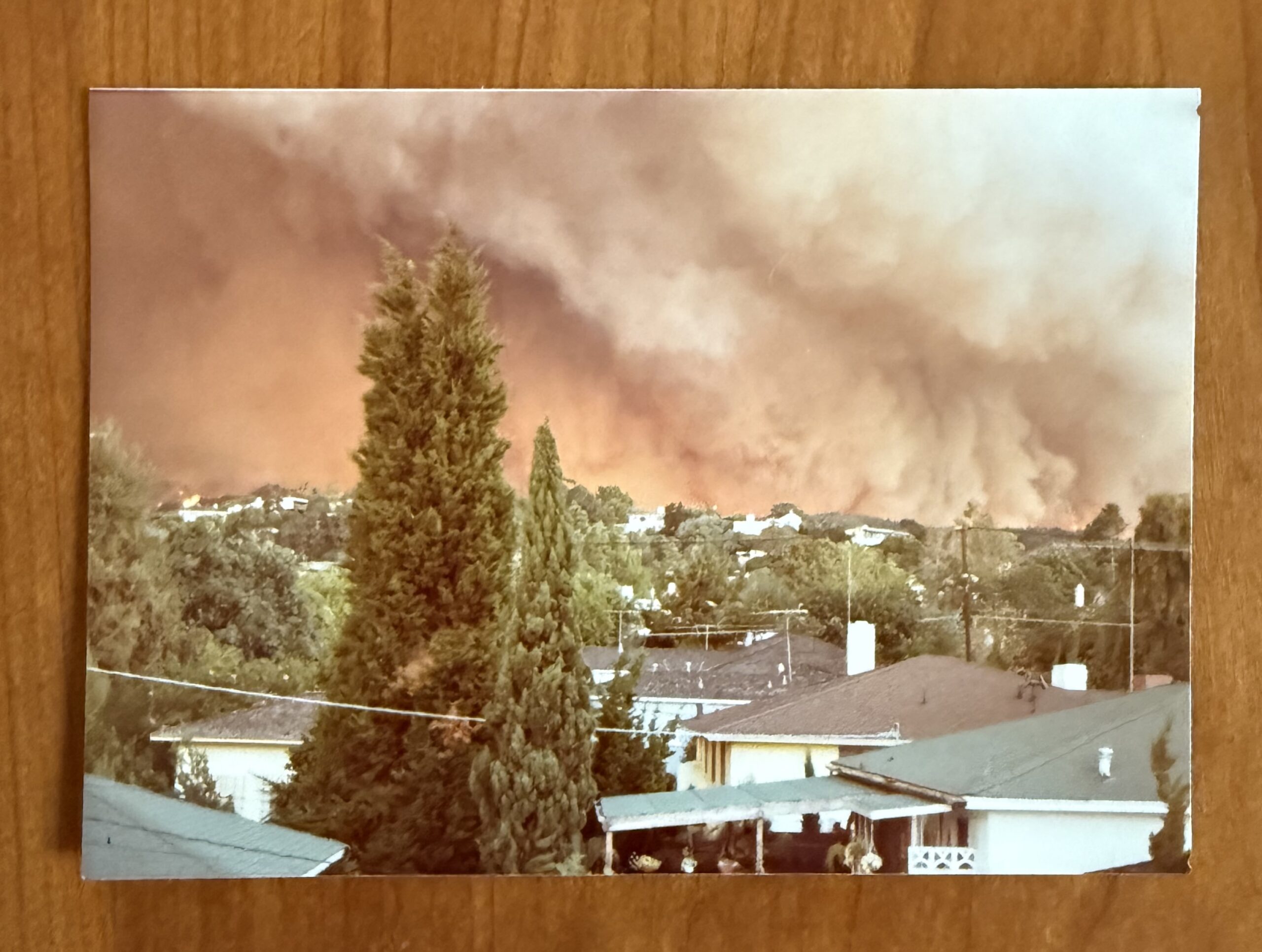
I grew up on Iliff Street, right in the middle of the ashes that up until a few nights ago, was a sunkissed neighborhood known as Pacific Palisades.
It was 1978, and I remember my dad climbing up on our roof with a garden hose. Every couple of hours, he would wet the house down, top-to-bottom, and everything surrounding it. I don’t remember everybody doing this, but my Dad is a Meteorologist, and back then he worked at the SCAQMD, the regional agency charged with studying, regulating, and improving air quality in Los Angeles, Orange, Riverside and San Bernardino Counties. Because of his specific remit and where we lived, he had a deep understanding of the Santa Ana winds and their effect on the Palisades.
When my dad explained what he was doing, he would point northeast to the hills behind us and tell us that if the winds didn’t die down, the fire miles in the distance would come towards our tiny little house and there would be trouble. As a small child, I don’t actually remember being scared about any of this. Every year there was a fire, the smoke was always so far away and so barely visible that it just seemed like anything else in life at the time. And besides, dads are superheroes to their children, so of course there was no danger.
The Mandeville Canyon Fire in 1978, taken by my dad from our roof
We ended up living in the Palisades until I was 15, when we moved up to Seattle, but in that time, these sorts of fires happened almost every year to some degree. The 1978 one was a big one though, and my dad had a flight scheduled to New York the following morning. He woke up every hour during the night to check the wind readings, and loaded up our Impala wagon for a prompt evacuation. That is how precarious things were, even 47 years ago. By sheer luck that night, the winds subsided, and the Palisades were spared. A few more hours of wind and 1978 would have been 2025. Same damage. Completely flattened.
I guess Pacific Palisades has always been a wealthy area, but wealth back then seemed less of a step-function than it is now. The “alphabet streets” where we lived seemed like the most modest of the neighborhoods; the place where teachers, government workers, and clerks lived. My parents bought our 1200 square-foot rambler for $38,000, and pretty much no one in the neighborhood had views of anything. The neighborhood was so named because the streets went from Albright, to Bashford, to Carey, to Drummond, to Embury, to Fiske, to Galloway, to Hartzell, to Iliff, to Kagawa. Felt really great not having to even look that up just now, but I will admit that I was Today Years Old before realizing there is no J. I wonder why. Each street was basically the same, although I distinctly remember Galloway having more tree trunks pushing the sidewalks up, making it a better route for jumping your Mongoose bike or Powell-Peralta board.
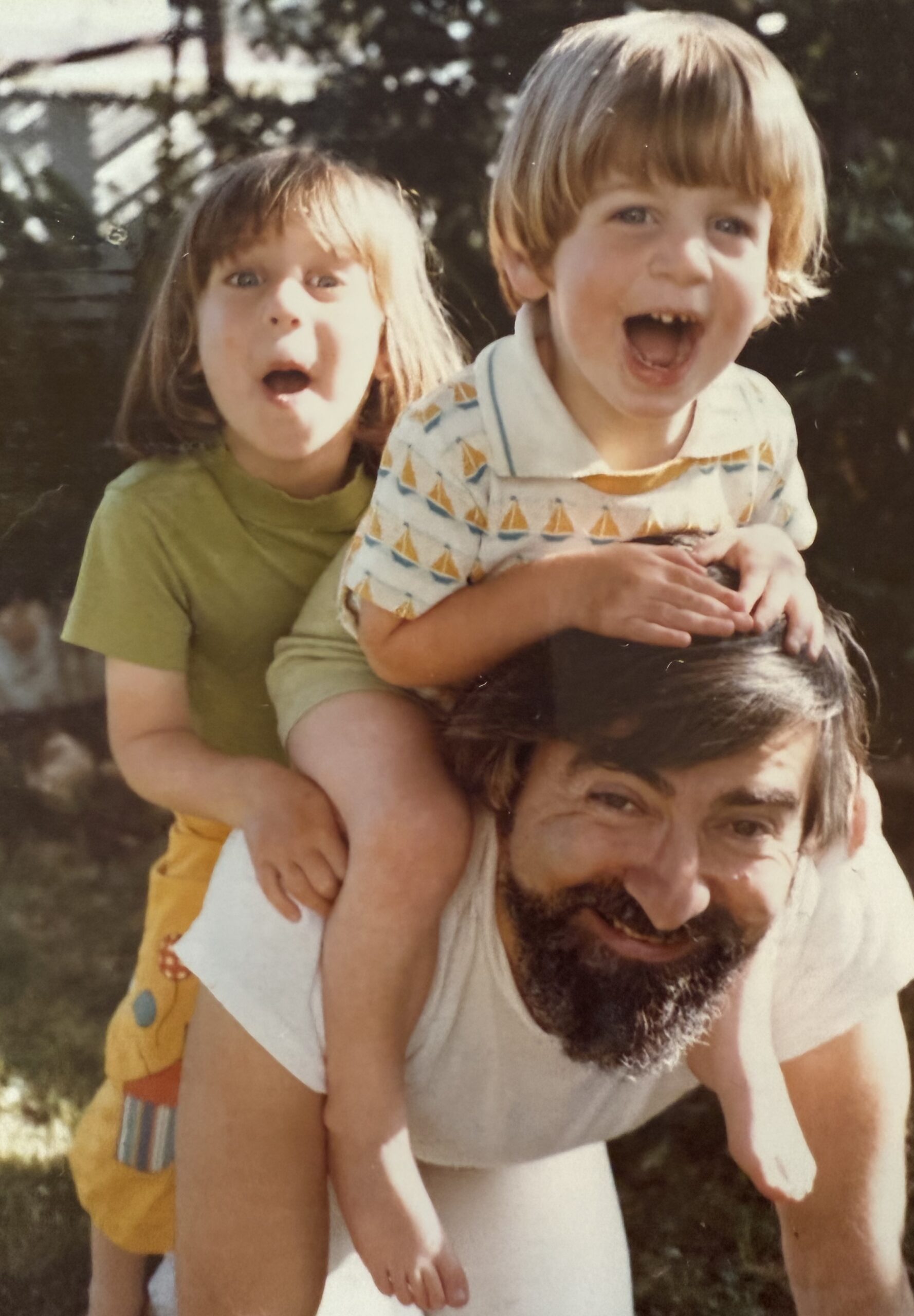
Art Davidson: Meteorologist, and professional piggybacker
As a kid growing up in the ’80s, the Palisades had everything you could possibly want. It was a “free-range” neighborhood, where we could ride our bikes as far away as the Santa Monica pier without worry. Palisades Park was home to AYSO soccer, tennis, basketball, “Par Course” stations, and most importantly to me, little league baseball. I was part of the “orange” franchise which started you off as a Ranger, then a Twin, and finally an Oriole. Our patron saint was Mel Haggai, who up until now, I didn’t know had flown 30 missions over Germany as a gunner when he was growing up (!!!). Mel got me to switch from first base to catcher, where I could have more impact on games. We didn’t have a single left-handed catcher’s mitt in the entire league, so he bought me one with his own money. I also remember perennial umpire John Meyers, who took me, my friend Adam Segel, and a few others to Disneyland, only to have to deal with us getting thrown out of the park for jumping off of a few of the rides and causing havoc.
Since reflecting on one year at Microsoft almost 12 months ago, a lot has changed. Most visibly to the outside world, we’ve completely re-designed and re-engineered our Copilot consumer app from the ground up with a a craft- and quality-first mentality.
The New Copilot mobile appCopilot Daily helps you catch up with world eventsGenerating images is easier than ever
Every element moves more gracefully, every response loads much faster, and every detail is more considered. Copilot may be the tip of the spear when it comes to how we are thinking about our products over the next decade, but we’ve also begun to modernize Edge, Bing, and our news offerings. We are just getting started.
Here is a preview of a feature we are working on for Edge that allows you to co-browse the internet with your AI companion. It’s the most powerful addition to the web browser since video:
Copilot Vision in Edge
We aren’t just adding to Edge, but we are also — just as importantly — subtracting from it. Although Edge has grown browser share consistently for several years now, we’ve also grown our feature set a little too aggressively. Every so often, you have to step back from the bonsai tree, look at it from all sides, and prune. The Edge of tomorrow will be both simpler and more powerful than it is today.
Same deal over on Bing. We are pruning away old growth to make room for better-looking, more powerful search results:
A world with cleaner search results
There is a lot more going on in Microsoft AI as well, including a bunch of new things we are cooking up for MSN:
A new butterfly for a new chapter of MSN
If you’re interested in joining the Microsoft AI team, we have a number of positions open right now that I’ve listed at the bottom of this post. If we already know each other, please reach out directly.
I mentioned in my last post a year ago how there were a lot of processes we needed to improve in the coming months. I detailed an unbroken chain of 8 steps for great products to emerge:
An idea that can improve lives if executed well.
Foundational research to light the path before design and coding begin.
Rich design explorations and prototyping to make the experience palpable.
Buy-in to build it at a level of quality that makes the team proud.
Impeccable UX engineering and UX writing to make sure every detail is dialed.
Well-conceived server-side engineering to make it scalable and maintainable.
Creative marketing to prime people for the experience.
… and finally, maybe more important that anything else on this list, the will to keep refining relentlessly after the experience is launched. This part is so often neglected as companies rush to build more things.
Although we are still in the first inning of this journey, I’m happy with the progress we’ve made across the board… in particular, steps 4 and 8. There is a different energy when everyone who is working on the product knows the standard is not “good”, not “better than our competitors”, but “the best version imaginable”. We are not there yet with any of our products, but there is no confusion where the bar is.
Reorienting our cross-functional teams to prioritize user experience has been a gratifying (and ongoing!) challenge. The vast majority of companies are not set up this way for a variety of reasons, some good, and some bad. In some industries, surviving might mostly about cost minimization, and not user experience. In other industries, “good enough” might be all people expect or need. But in just about all companies, there is some form of diminishing returns when it comes to how much time is spent getting every detail just right. The question is: where does a company draw the line?
One sign your company draws the line too low is if people insist that every detail, no matter how esthetic, be rigorously tested in order to prove it is instantly metrics-positive. This is a sign of a culture that rejects the value of taste and long-term vision.
Does that mean you should test nothing? Of course not. You should test everything, at the very least, to prevent accidentally messing something up. I still remember more than 20 years ago, during my first week at ESPN, causing our entire front page to disappear because I forgot a semicolon in a Javascript file. Testing for safety and information, though, is different than testing as religion. Furthermore, there are some things — particularly in the world of large language model training — that should absolutely follow a cycle of train/test/release/repeat.
Culturally speaking, this rebalancing of our values has created a spark for great work to emerge. Many of the same people who have been working on Bing, Edge, MSN, and Copilot for years simply have a new set of product-building principles now, in addition to some great new teammates and refreshingly smaller, evenly staffed cross-functional teams. It’s been wonderful seeing everyone exercise muscles that show up more often in startups and creative agencies than in 49-year old tech companies. The ingredients have been here all along, but the recipe is changing.
Speaking of ingredients, we are looking for more Designers and User Researchers to join the team at Microsoft AI.
These positions are United States only, Redmond-preferred, but we’ll also consider the Bay Area and other locations:
Note that we are looking mainly for experienced, hands-on individual contributors to join our team. If inventing the design patterns for the next phase of the consumer internet sounds right up your alley, we’d love to talk to you.
I tried some absolutely outstanding ice cream yesterday that reminded me of yet another reason I feel lucky to be part of Generation X:
We are living in the golden age of ice cream.
In the 1970s, we had a few basic flavors to choose from: vanilla, chocolate, strawberry, chocolate chip, mint chocolate chip, and rocky road. There were a few shops like Baskin Robbins that marketed some scary stuff like Rum Raisin, but if you were just getting ice cream at the supermarket or some other ordinary location, those were your choices.
There also wasn’t as much science to ice cream back then. The term mouthfeel was still relatively obscure. It all seemed perfectly good back then because… ICE CREAM!!! … but compared to what we have today, it was, as the kids say, “supes basic”. In the 1980s, along came the frozen yogurt craze which pointed to how much untouched frontier was ahead of us. Shoutout to Humphrey Yogart, by the way — the world’s best named frozen dessert shop. Shoutout also to Aaron Cohen’s Gracie’s, which not only has excellent ice cream, but the world’s only bathroom dedicated to Dolly Parton.
Anyway, we’ve learned so much about fat content, texture, and flavor combinations since then that we have practically invented a new food group.
A few years ago, during a trip to the underrated gelato mecca that is Croatia, I had a variety which tasted different than anything I’d ever tried. It was a “fig yogurt gelato” from a little shop in Cavtat. I usually stay away from frozen yogurt because it’s generally not as good as ice cream, but this was intriguing. A great flavor (fig), combined with a beautiful tartness (yogurt), along with best texture for frozen desserts (gelato). It was outstanding, and I have not been able to find anything like it ever since…
Until yesterday!
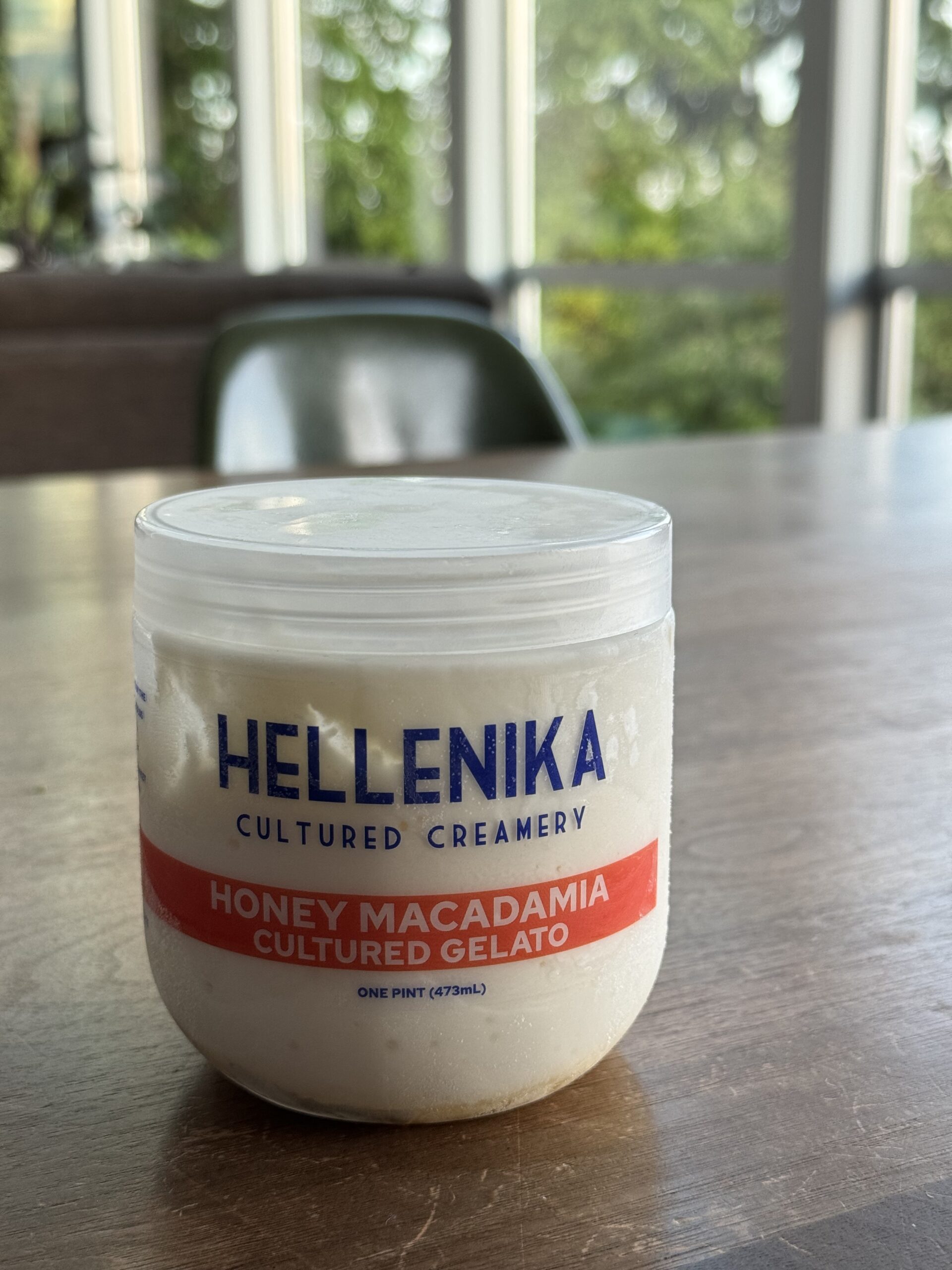
Behold, Hellenika Cultured Gelato:
I don’t think I will ever purchase another brand of ice cream at the store ever again. It is the most perfect ice cream I have ever tasted. The creamiest mouthfeel, wonderful flavor combinations, and that little bit of tang which reminds you this is no ordinary substance.
Hellenika is a small creamery run by three Greek/Australian siblings with a single location in Pike Place Market in Seattle. Until recently, it was not available in stores, but you can now pick up pints in Metropolitan Market.
If you live in Seattle, you need to try this immediately.
If you don’t, you should try to get someone to mule you some in dry ice. Hopefully one day it will ship on Goldbelly.
Don’t get me wrong. I like a good low-grade Blue Bunny mini-cone as much as the next person, but I feel like we’ve passed through some sort of intergalactic hyperspace with this gelato. The future is now. Get this to your freezer any way you can. 🙌
The good old days when America was “great” aren’t the 1950s. They’re whatever decade you were 11, your parents knew the correct answer to any question, and you’d never heard of war crimes tribunals, microplastics or improvised explosive devices. Or when you were 15 and athletes and musicians still played hard and hadn’t sold out.
I remember having a conversation with a friend of mine around 2016 about this, and he artfully explained this theory to me at the time. It was an aha moment for me, as I tend to view each new decade as "the best one" because of how the world has advanced over my lifetime. Your view on this appears to depend quite a bit on the degree to which the news you read enriches or poisons your psyche, but also the happiness and agency you feel over your own life as you've grown from a child into an adult. For some, this arrow points up, for others, it points down, but I bet the biggest increase in the last decade or so is those for whom the arrow points up but feels like it points down. Outrage and fear-fueled information platforms are partially to blame, but so is the very American culture of determining your own happiness by comparing yourself to your neighbors or peers.
I had the good fortune to attend the excellent Pearl Jam concert at Climate Pledge Arena last week, and it reminded me of something I already knew: I liked music in the 1990s more because I had the excitable mind of a teenager, and being 30 feet away from them brought me back to the very best of those times... but you couldn't pay me enough to go back in time to any decade.
"Here’s where the science gets really ugly. The more addicts rely on these stimuli, the less pleasure they receive. At a certain point, this cycle creates anhedonia — the complete absence of enjoyment in an experience supposedly pursued for pleasure."
A spot-on analysis of where we are as a society with our addiction to short-form entertainment and distractions. I really only see one way out of this (for me, at least) that is simple and resolute: ditching the smartphone. I have tried this for periods of time and it's been perfectly fine in my personal life, but once you need to carry a smartphone for work, complete elimination becomes tricky. I've moved back to my iPhone Mini, which helps a bit, but the thing that would really do the trick would be a phone that only did messaging, phone calls, calendar, Teams/Slack, and maybe Maps. I honestly don't even need a camera, though I'd understand that addition.
Last week marked one year at Microsoft for me, and what an unexpected adventure it’s been! I thought I was coming in to lead a a stable of popular, but well-trodden web properties, and I ended up getting to work on a whole lot more, including Windows, Bing Chat, and the company’s biggest bet in years: Copilot.
“The Handshake” — Designed with Love, in Puget Sound
I usually write a lot about the companies I work at but have held off until now because we haven’t been hiring. Well now we are! We’re specifically looking for Designers and UX Engineers to work on our design system for Copilot. Some of these positions are on my team and based where we have offices (Puget Sound, the Bay Area, Atlanta, New York, Vancouver, Barcelona, Hyderabad, Beijing, and Suzhou) and some are on adjacent teams and can accommodate fully remote work. If you are a Designer or UX Engineer with a passion for design systems and AI, we’d love to chat.
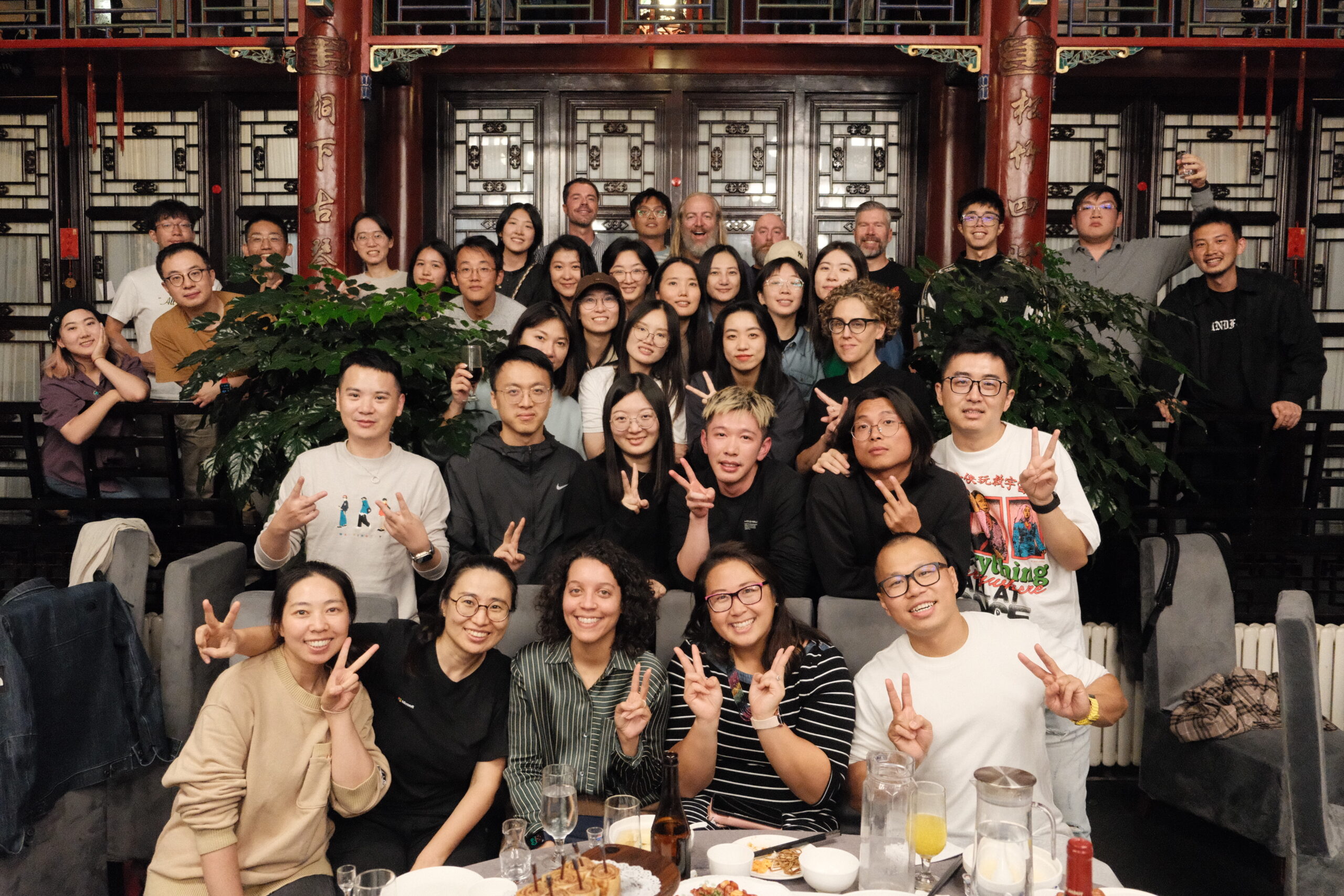
A recent visit to our team in Beijing… I had never been!
So what has year one been like? The good and the “needs improvement”. 🙂 👇
One of the reasons I decided to join Microsoft was I missed the joy of in-person product-making. I know not everyone feels the same way so I’m not trying to make any broad statements about local vs. remote work, but for me, it has been even more refreshing than I expected. I usually come in 3-4 days a week, while others on the team are anywhere from 0 to 5.
It’s funny, sometimes I will wake up on a Monday and think to myself “ahhhh, this is going to be a chill work-from-home day” and by the end of the day, I realize I’ve been staring into a screen on video calls for almost the entire day and how much that slowly saps my energy. Meanwhile, in-person days are filled with walks, whiteboarding, and energizing sessions with some of my favorite teammates I’ve ever had. I realize not everyone feels this way about being in the office from time-to-time, but I do. Even our fierce, interdepartmental karaoke battle helped bring a bunch of teams together who had never met before.
Mojin killin’ it at design karaoke
The other great thing about lucking out and joining when I did is that we are embarking on one of the rare paradigm shifts that occurs in technology maybe once a decade. The 1980s were about personal computers. The 1990s were about the internet. The 2000s were about smartphones. The 2010s were about the cloud. And the 2020s will be about AI. The really powerful thing about all of these developments is that they don’t replace each other, but rather they build on each other. AI is the result of everything that came before it. If you got into design to help shape the culture of the world around you, these are the moments you treasure.
These turning points are also wonderful because they give you a chance to reawaken to your Beginner’s Mind. I have learned more in my first year here than at almost any other time in my career. Not only does the pace of technological change in AI force you to build skills as you go, but there are so many amazing engineers, designers, researchers, writers, marketers and other creative people to learn from, that it happens almost automatically.
When I was interviewing here, not even my prospective new boss told me about any of what was behind the curtain. Only during my first week did I find out all we are working on to empower every person and every organization on the planet to achieve more. That is Microsoft’s mission statement, if you hadn’t heard it before. It’s an uncommonly good filter with which we can all ask ourselves every day “does this project actually do that?” It’s quite freeing as it gives you license to question projects at every stage of development.
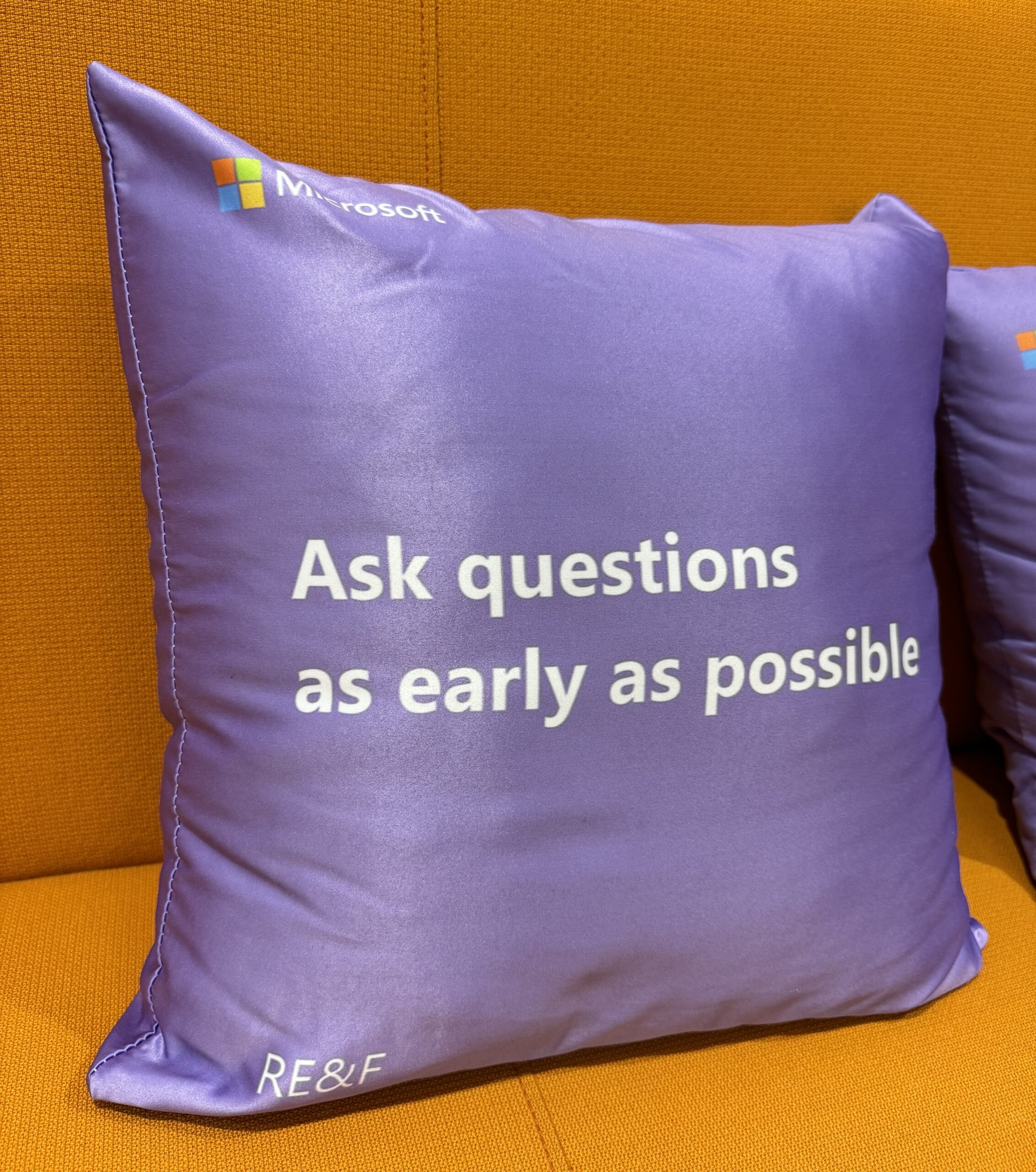
Don’t sleep on these pillows
Another thing I’ve loved about my first year here is that I joined a group that has figured out how to ship very quickly. That also has its downsides, as we have plenty of craft problems to solve, but it’s great working for one of the largest and most established companies in tech and being able to ship within weeks of designing something.
One more thing that’s blown me away is the Inclusive Tech Lab, where we work on new technologies to make our products inclusive to people all of abilities and walks of life. No one experiences technology the same way, and teammates like Dave Dame and Bryce Johnson do a ton of great work to make sure that’s top of mind for everyone.
Finally, one of the unsung benefits of working for a native Seattle company again is that Seahawks stuff is all over the place. Presentations, charity auctions, everyday office attire… you name it. It’s nice to not be the only one with good taste in football teams.
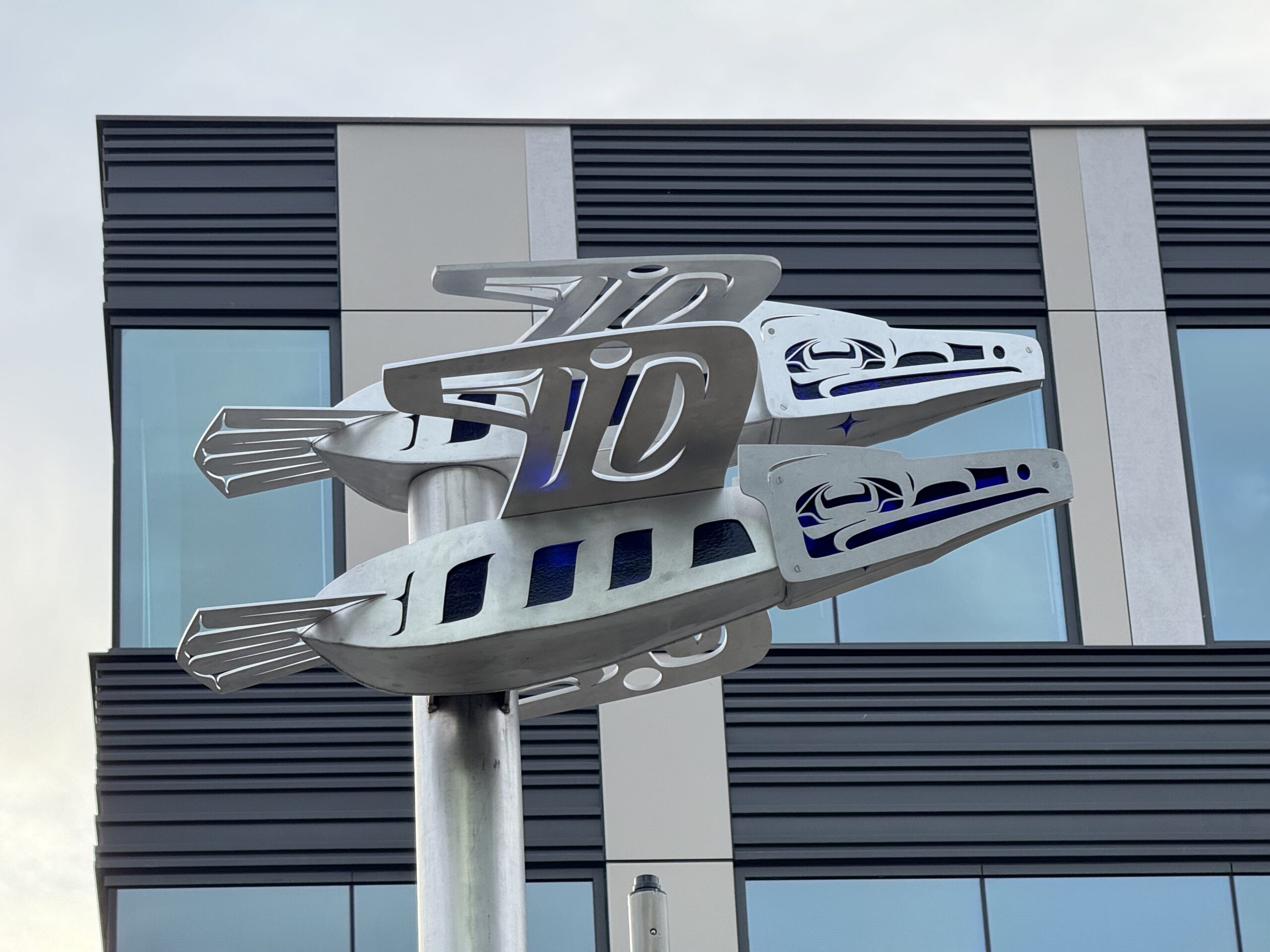
There are actual seahawks on campus
I am no corporate shill, however, so I must also be honest about some of the things that need improvement over here.
At the top of my list is that Microsoft has not yet fully embraced the role design plays at most other tech companies. We were engineering-driven in 1975 and we are squarely engineering-driven in 2023. The world, meanwhile, has changed in that time. It is no longer sufficient for complex things to work. They must also shed their complexity. People expect the products and services they spend their time and money on to delight. To overdeliver. To give them superpowers. Those sorts of qualities only materialize when you have supergroups building products.
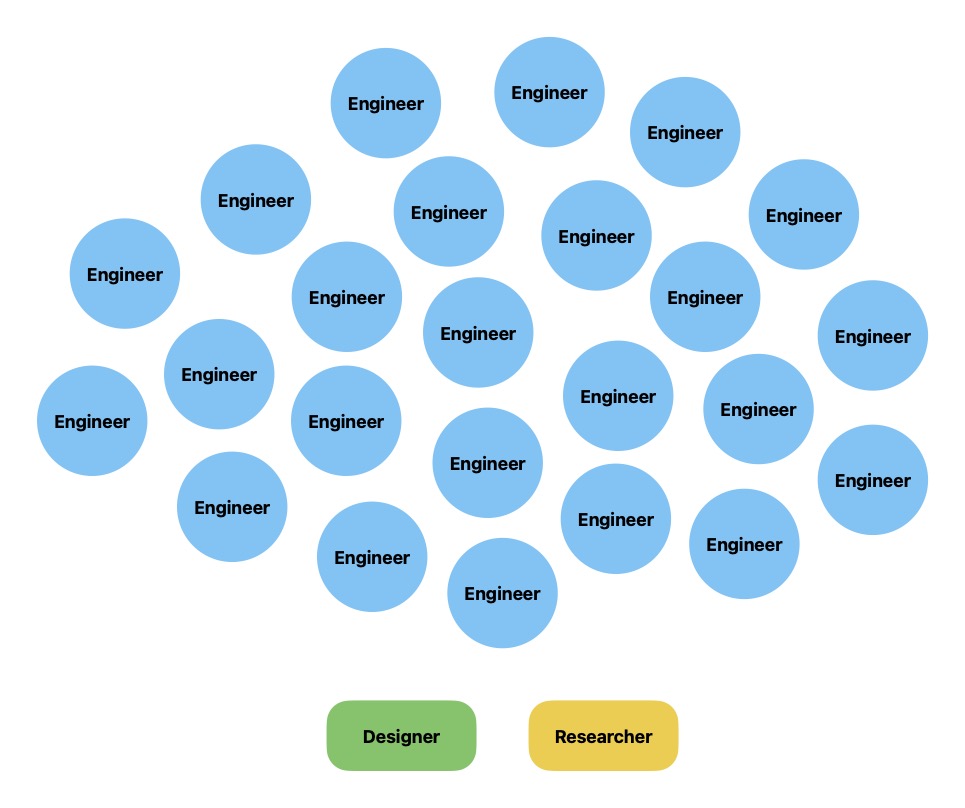
In music, a supergroup is when a singer, a guitarist, a bassist, a drummer, a keyboardist (and so on) who are all at the top of their game come together to create an album. In tech, a supergroup is a researcher, a couple of designers, a product manager, and a Volkswagen Bus or two full of engineers. Up until a decade or so ago, a lot of tech companies followed the model of packing projects with as many smart engineers as they could find and only sprinkled in things like design and research as necessary. I still see some of this thinking in pockets over here. I’m trying to influence things, but it’s a delicate dance, especially when the company has had such enormous success by doing so many other things very well.
I think there are plenty of people here who still feel like being engineering-led is unequivocally good, but to those people I would say that in a modern tech company, design is engineering. It’s no better or worse, but it does have very different leverage in the building of a product.
Mess up the green or the yellow, and all the blue work can be wasted
On the plus side, Microsoft has never had as much design and research talent as it has right now, and we are increasingly looked to by the executive leadership team as lighters of the path. When we go into high-stakes meetings, we always go in with pixels and prototypes, which are uniquely good at cutting through bullshit and ambiguity. As a wise person once said, a prototype is worth a thousand meetings.
There are a ton of amazing designers and researchers who have been here for 10 and even 20+ years whose hard work has led to this moment of evolution for the company, and every day I am in awe of their perseverance.
Temple of the Dog: Seattle’s greatest supergroup
Next on my list is how often we get in our own way with “procedural goo”. I’ve worked in plenty of large companies including Twitter, Disney, and MSNBC, and have never seen the level of approvals, paperwork, and rules that get in the way of speed and autonomy here. Just transferring someone from within my own org to a slightly different role within my own org took a dizzying amount of effort. At most companies, this would have been about 10 minutes of work: one minute from me and nine from someone in HR trying to navigate to the right screen in Workday.
Then we have acronyms. My GOD do we have acronyms. I actually liked acronyms before I got here! I usually think they are cute. After seeing a new one almost every single day since getting here, I have resolved to never use them either inside or outside of work. I even say “Cyan Magenta Yellow Black” out loud if I have to!
When I think of bad acronyms, I always remember cf2gs: an excellent, but unfortunately named ad agency from Seattle’s past
Finally, the last thing on my list — and this is where you come in — is dedication to craft. It is so tempting to try and “science” your way into viable products these days. Build the beginnings of a customer base through rudimentary product-market fit, and then fastidiously optimize your funnel, your game mechanics, your viral loops, your push notifications, and so on and so forth. These gains are not always easy to come by, but they are rooted in ruthless experimentation and allegiance to short-term data. Our north star is at least pretty pure — Daily Active Users — and that metric is usually a good indicator that you’ve made something people like, but doctrinaire allegiance to almost any singular metric can quickly make people forget why we are in this profession to begin with: to improve lives. Or to put it squarely in Microsoft parlance again: to help every person and organization on the planet achieve more.
If you ever find yourself asking the question “how can we increase Daily Active Users?” instead of “how can we make our product better for people?”, you’ve already lost. Metrics are trailing indicators of qualitative improvements or degradations you’ve made for your customers… they are not the point of the work.
Recently, we’ve made some excellent strides in prioritizing qualitative product improvements even when they fly in the face of metrics we care about, and it’s really gratifying to see. It reminds everyone that a product is the collision of thousands of details, and the crafting of these details requires taste.
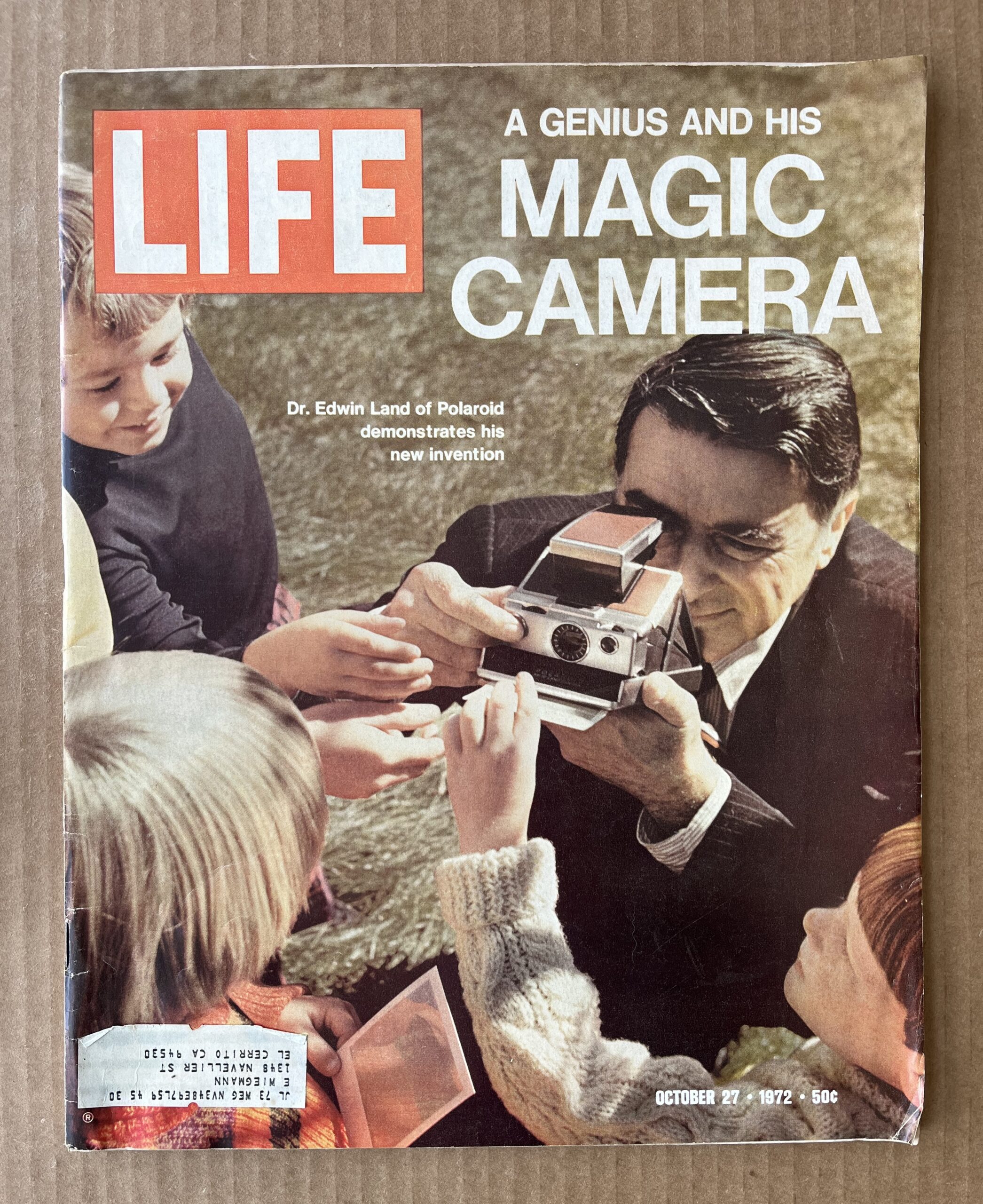
The Polaroid SX-70 camera: a triumph of design, engineering, and dedication to craft.
Designers are often looked to as “owners of craft and taste”, but craft is very much a team sport. It’s not just how things look and feel but also how they work. I very much like how Nick Jones (channeling Patrick Collison) at Stripe put it in this video:
Foundational research to light the path before design and coding begin.
Rich design explorations and prototyping to make the experience palpable.
Buy-in to build it at a level of quality that makes the team proud.
Impeccable UX engineering and UX writing to make sure every detail is dialed.
Well-conceived server-side engineering to make it scalable and maintainable.
Creative marketing to prime people for the experience.
… and finally, maybe more important that anything else on this list, the will to keep refining relentlessly after the experience is launched. This part is so often neglected as companies rush to build more things.
Some people would look at this list and think “yep, makes sense”. Others would look at it and think “sounds slow and not very agile”. The trick to balancing this level of quality with speed of development is realizing that it’s often more efficient to experiment in step 3 than it is in step 6. This is why so many modern tech companies realize that hiring more designers and researchers doesn’t waste time and money… it saves time and money. With less than a week of one designer’s time, we can produce a wide variety of prototypes to test with real people. Just recently, we created an entire GPT-powered research application without even bothering a single engineer.
Design is engineering.
Finally, a brief note about prototyping. I would argue that the most impactful innovation in the craft of product development over the last 20 years has been the rise of rapid design prototyping. Prototypes that demonstrate an experience are useful not just in usability testing, but also in selling ideas up and across the organization. Engineers hate working on things that haven’t been thought through or “appropriately politicked” yet, and if you can bring them a working prototype that has already been vetted with users and various stakeholders across the company, they will love you for it and work hand-in-hand with you to get every detail right.
Design prototypes are the currency of a high-craft, high-speed product development organization, and they are increasingly the currency of our team.
Alright, back to the hiring. I plan to hire against the entire growing list of products our team is responsible for: Copilot, Windows, Edge, Bing, Start, Skype, SwiftKey, and so much more… but for now, this is a concerted hiring effort centered around Designers and UX Engineers to help build out the emerging design system for Copilot and our suite of AI-powered products.
If this is you, please have a look at the following roles we’ve just posted: