Hi-Ball Caffeinated Mineral Water is Nice
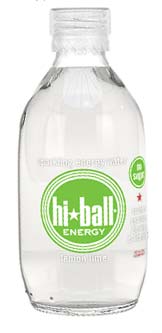 A couple of weeks ago, I ditched coffee. I was generally a one-iced-mocha-in-the-morning guy with the occasional refresher towards the end of the day.
Bad.
Coffee as part of a routine is kind of like cigarettes as part of a routine. It’s not exactly good for you, and once you’re used to it, you need it just to feel “normal”.
Quitting coffee, however, doesn’t mean I never want an occasional dose of caffeine. There are all sorts of alternatives out there like Red Bull, Jolt, hot tea, or iced tea, but I think I found my favorite:
Hi-Ball Sparkling Energy Water
Hi-Ball tastes like San Pellegrino or Perrier, is available in plain or lightly flavored, and contains no sugar, sucralose, or other sweeteners. Its caffeine comes naturally from guarana berries and it also contains 120% of your daily B vitamins (whatever those do).
So if you’re looking for a reasonably harmless caffeinated drink to try, see if you can find Hi-Ball at your local store. Most places around Seattle don’t have it but I’ve found a few that do.
When Your Neighbor Builds a Jackass Home
While out on the lake this weekend, I came across this sign:

So nice. I love how the neighbors not only call out the homeowner but the architect as well. Wrecking a neighborhood is a team process.
Here’s a shot of the offending house. It’s tough to tell how overbearing the concrete wall is from a straight-on angle, but it’s pretty awful:

UPDATE: Below is a better (worse) shot of the prison wall —

The Growing Sucralose Infestation
 Whatever happened to the good old days when you could glance quickly through the beverage aisle and tell the diet beverages from the good beverages? We’ve had such a great system for so long: if it says “diet” or “sugar free” it’s DIET, and if it doesn’t, it has some form of super tasty sugar derivative in it, whether it be cane sugar, high-fructose corn syrup, or something else awesome.
I used to be so good at telling the two drinks apart.
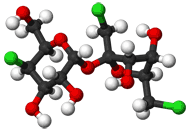
Lately, however, I’ve found myself repeatedly hoodwinked by the chemically synthesized impostor known as sucralose… or “Splenda”, its Christian name. The substance is 600 times sweeter than table sugar, and although it’s not as bad as saccharin, aspartame, or any other past cancer-powder, it’s still not sugar, and it still tastes like crap.
As such, I humbly request of beverage companies that you please quit trying to be sly about these DIET drinks and label them just as previous DIET drinks were labeled: with the letters D.I.E.T.
When I see those letters, I know that purchase of the beverage in question will result in palate-shriveling aftertaste and lack of drinking satisfaction. When I see those letters, I know to move right along.
Instead, however, these sucralose-tainted drinks often use small, subtle terms like “lower sugar”, “lower calorie”, and sometimes no marquee labeling at all. This is confusing as there are plenty of legitimate “lower sugar” drinks on the market that simply removed some of the sugar (see Paul Newman’s Lightly Sweetened Lemonade). Often times, you need to read the entire label to know the difference. And to make matters worse, a lot of these drinks contain sugar near the top of the ingredient list and sucralose near the end… so it’s not even sufficient to just “look for the sugar” anymore.
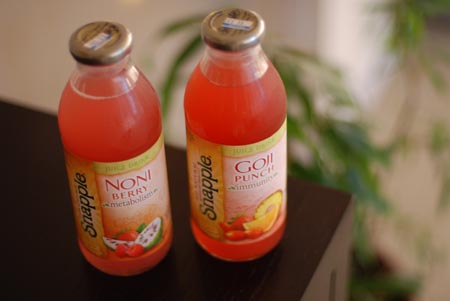
“Noni Berry” for metabolism and “Goji Punch” for immunity. Can you tell which one is the diet one?
To be clear, I have nothing against sucralose itself. It could very well be the best artificial sweetener ever invented. I just resent that marketers, by not clearly labeling it, have blurred the representation of what is and what isn’t a diet drink; and as a front-line soldier in the weekly quest to discover and sample new beverages, I’m just sick of getting hit by all this repackaged, remarketed diet shrapnel.
UPDATE: Literally the very nanosecond I pressed the Publish button just now, a Splenda television commercial came on. It’s everywhere.