Announcing ElectionVine: Distributed Presidential Elections
This morning on Newsvine, on Mike Industries, and on thousands of blogs across the world, we launched ElectionVine.
ElectionVine is a giant distributed polling system designed to gauge the momentum of the U.S. Presidential race through the eyes of the independent internet and blogosphere. While traditional polling methods are carried out by single organizations, ElectionVine is entirely in the hands of site owners like you.
Here’s how it works:
- Head to electionvine.com and get your personalized poll code. You can customize what your poll will look like so it fits the colors of your site and even personally endorse a candidate if you’d like.
- Place your poll code in the sidebar of your site or blog and watch the votes come in.
- Check your own site’s political breakdown right from within the poll itself or on the ElectionVine Leaderboard.
Cumulative vote totals on the ElectionVine leaderboard will continue to rise up until the presidential primaries, but users’ votes will reset every month, allowing you to essentially see an entirely new set of data every 30 days.
The coolest part of ElectionVine, however, is that once you’ve voted on one site (say, Techcrunch), your vote will automatically count on any other sites you happen to visit thereafter (say, Mike Industries).
The dream of ElectionVine is to collect the most distributed view of how the election is shaping up online, and for that, I ask the assistance of you, faithful Mike Industries reader. We’ve provided two quick, unobtrusive methods of embedding, via a standard embed tag and via the newly developed WEDJE javascript method.
So head on over to ElectionVine and set up your polling place today. The country and The Vine thank you!
How To Keep Widgets From Slowing Down Sites: WEDJE
The whole world is going to widgets. This overused, overhyped term refers to third-party code one places on their website or blog in order to display such things as Flickr photos, Twitter status, or iTunes playlists. Everybody and their mom is putting out widgets these days, and although only about 1% of them are useful or interesting, they are an important new distribution mechanism that is changing the way companies think about syndication.
But there is a big problem with widgets: they slow down the sites that use them. In the best case, you have a company like Flickr whose servers are almost always snappy, and in the worst case, you have a young startup that is constantly struggling against increasing demand and occasionally can’t serve up any code at all.
The problem is that in either of these cases, the completion of your site’s loading and rendering depends on someone else’s code living on someone else’s server. Including a fast and reliable Flickr widget still slows your site down by at least a split second and including a less stable one can leave your site hanging indefinitely.
We’ve been developing what we think is going to be a gangbusters widget at Newsvine over the last few months but just as we were getting ready to deploy it, Intern Rob and I hacked together what we think is a method of deploying widgets in such a fashion that they don’t affect the load times of their parent sites whatsoever.
Following is a breakdown:
Read more…
Is It Okay To Eat 50 Year Old Cough Drops?
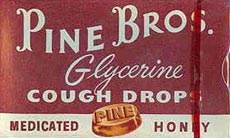 So after my post about the disappearance of Pine Bros. cough drops, Freckles discovered there was an eBay auction offering up one unopened box of the honey-flavored variety. The rub being that they were from a production run in the 1950s.
I placed a bid of $6, won the auction, and my 50-year-old box of cough drops is now en route. So the question is: what is the shelf life on an item like this and are they safe to eat? If yes, I will eat them. If no, I will just keep them as memorabilia.
Any scientists out there in the audience? What happens to honey and glycerin over the course of 50 years? I have actually heard that honey is the only food in the world that never spoils.
The Most Useless Infographic Ever
The purpose of infographics is to take data that is initially tough to interpret and distill it into some high-level knowledge that readers can remember and take away with them. Upon picking up a six-pack of Cottonelle last night though, I think I found the most useless infographic ever:
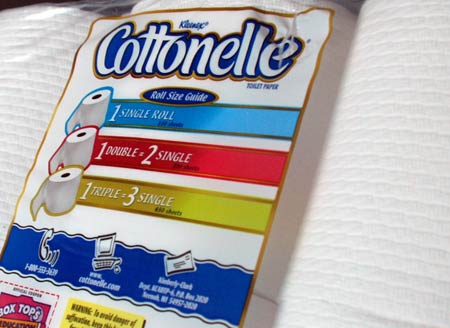
Yes indeed. It’s a visual reminder that:
- 1 x 1 = 1
- 2 x 1 = 2
- 3 x 1 = 3
That’s good times. And there’s even a 1-800 number you can call for further details as well as a website where perhaps you can plug in different values and see how many single rolls a quintuple roll would equal.
If I were the makers of Cottonelle, I’d probably use this space to showcase and romanticize the process by which they get Aloe into the toilet paper. I’ve always wondered about it.
For much better examples of infographics, check out a great book Rex showed me: Understanding USA.